
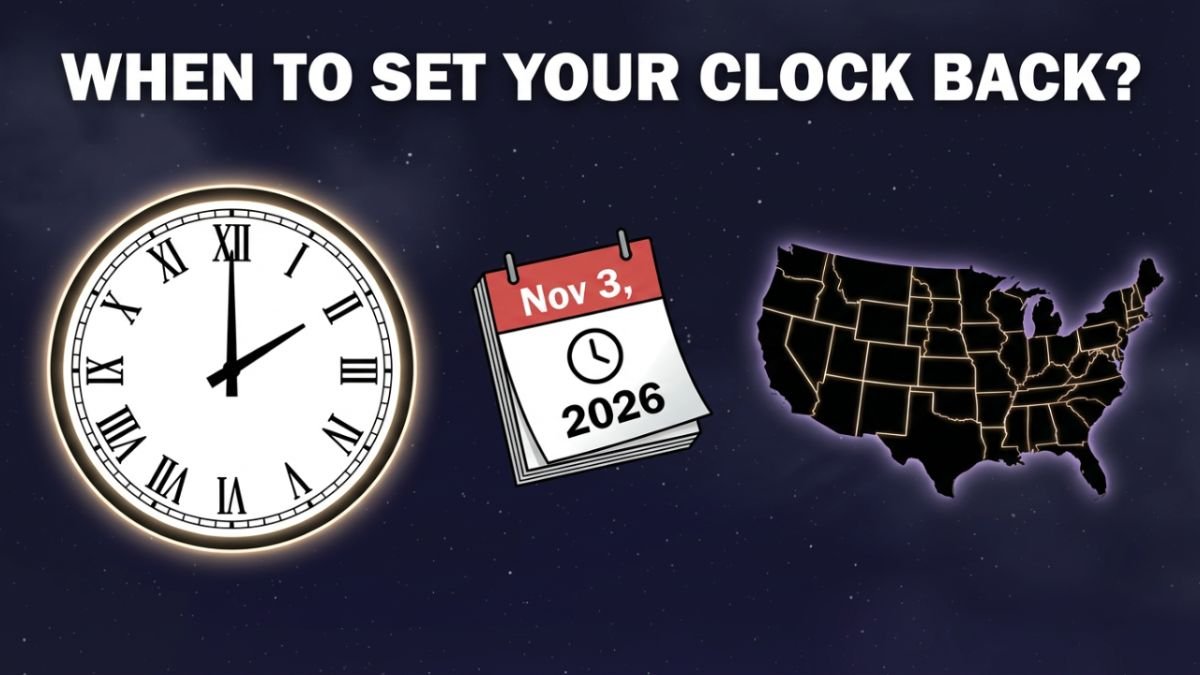
Every year, many of us take part in a small time-changing tradition that quietly shapes our daily routines: Daylight Saving Time. Twice a year, clocks shift forward or backward, gently nudging our schedules along with them. Some of us welcome the change because it brings more daylight into our evenings. Others find it slightly confusing or disruptive. But whether you embrace it or not, Daylight Saving Time continues to be a part of life in several countries around the world. As we step closer to 2026, many people are already curious to know when exactly the clocks will “fall back” this year, and what that means for their daily lives.
Understanding What Daylight Saving Time Really Is
Daylight Saving Time, often shortened to DST, is the practice of adjusting the clocks during certain months of the year. In the spring, clocks move forward by one hour, meaning we temporarily lose an hour of sleep but gain extra daylight in the evening. In the fall, the clocks are set back by one hour, returning us to standard time and giving most people a much-appreciated extra hour of rest.
The main idea behind this practice is to make better use of daylight during waking hours. By aligning our schedules with seasonal daylight patterns, evenings become brighter during the warmer months when people tend to spend more time outdoors. When autumn arrives and the days naturally become shorter, clocks fall back again to give us brighter mornings and earlier sunsets. Even though this idea has been debated over time, it has become a long-standing tradition in many regions.
The Meaning Behind “Falling Back”
The phrase “fall back” is more than just a handy memory tool. It marks the moment when Daylight Saving Time officially ends for the year. When clocks move backward by one hour, we return to what is known as Standard Time. For many people, this shift arrives as a gentle reminder that winter is on its way. The afternoons grow darker earlier, the air cools, and the pace of life may begin to slow.
This change also gives us a rare treat: one extra hour. Whether you spend it catching up on sleep, relaxing with family, or enjoying a quiet morning, it feels like time has stretched slightly in your favor. However, it also means evenings will become noticeably darker sooner, which can take some getting used to.
When Clocks Fall Back in 2026
In 2026, the clocks in the United States will fall back on Sunday, November 1, 2026, at 2:00 a.m. local time. At that moment, the clock will roll back to 1:00 a.m., effectively repeating the hour. If you happen to be awake at that time, it can feel like time has briefly paused and restarted. For most people, though, the change happens quietly while they sleep.
This schedule follows the same pattern used in recent years. Daylight Saving Time in the United States begins on the second Sunday in March and ends on the first Sunday in November. So as autumn settles in, November 1 becomes the day when we all step gently back into Standard Time and prepare for shorter, cooler days ahead.
How Other Countries Experience The Change
Not every country observes Daylight Saving Time, and those that do may follow different schedules. Many European countries, for example, fall back earlier than the United States. There, the change usually happens on the last Sunday of October. So in 2026, people in much of Europe will turn their clocks back one week earlier than Americans.
In other parts of the world, such as many Asian and African nations, clocks never change at all. These regions experience more consistent daylight hours throughout the year, making Daylight Saving Time less relevant. The result is a global patchwork of time-keeping practices, which can sometimes make coordinating international travel, business, or online meetings a little tricky during the transition weeks.
How The Time Change Affects Our Bodies
Even though the clock only moves by one hour, that small adjustment can have a noticeable effect on our daily rhythm. Human bodies rely on internal biological clocks that respond to light, helping regulate sleep, energy, and mood. When the daylight pattern shifts suddenly, our internal systems may need time to adjust.
Some people find themselves feeling slightly more tired, restless, or out of sync for a few days after the change. Children and older adults in particular may take longer to adapt. On the positive side, the extra hour of sleep in the fall change often feels refreshing and welcome after the faster pace of summer and early autumn. But the darker evenings can also bring a sense of slowing down, sometimes even affecting mood and motivation.
The key to adjusting smoothly is patience. Your body will naturally fall into the new rhythm after a few days as long as you maintain healthy sleeping habits.
Preparing For The Fall Back Change
Even though modern devices like smartphones and computers usually update automatically, many household clocks still need to be changed manually. Ovens, wall clocks, microwaves, car dashboards, and wristwatches may all require adjustment. Taking a few minutes before you go to bed on the night before the change can save confusion the next day.
It can also help to gently shift your sleep schedule forward by ten to fifteen minutes in the days leading up to the transition. This way, the change feels less sudden. Keeping evening lighting soft and avoiding heavy meals or exciting activities before bedtime can also support better sleep during the adjustment period.
For parents, explaining the change to children ahead of time can make the experience smoother. Kids often find the idea of “getting an extra hour” both funny and fascinating, which can turn the shift into a learning moment rather than a disruption.
The Everyday Impact Of Falling Back
The end of Daylight Saving Time does more than change the clock. It also shifts how we experience the day. Mornings become brighter earlier, which can make waking up feel easier. But evenings darken sooner, sometimes leading to quieter, cozier nights at home. Many people notice that they naturally begin winding down earlier and transitioning into a slower seasonal rhythm.
For some, this shift marks the start of the holiday season. The earlier darkness can add a sense of warmth and anticipation as homes start to glow with lamps, candles, and seasonal decorations. For others, it may mean adjusting commute schedules, outdoor routines, or exercise habits to fit the sunlight available.
Businesses and communities also prepare for the change. Transportation systems, television programming, and scheduled events all coordinate carefully to ensure everything runs smoothly despite the time shift. While most people barely notice this behind-the-scenes planning, it keeps everyday life functioning seamlessly.
The Ongoing Debate About Daylight Saving Time
In recent years, Daylight Saving Time has become a topic of discussion and debate. Some people argue that the benefits, such as brighter evenings and potential energy savings, make it worthwhile. Others feel that changing the clocks twice a year disrupts sleep patterns, creates confusion, and no longer fits modern lifestyles.
Because of this, various governments and regions have considered or proposed making either permanent standard time or permanent daylight time. However, changing national time policies is complex and requires coordination across states, industries, and international partners. So for now, the familiar rhythm of “spring forward, fall back” continues in many places.
Reflecting On Time And Seasons
As simple as it may seem, Daylight Saving Time reminds us how closely our lives are tied to daylight. We plan our work, our routines, our rest, and our social lives around the rising and setting of the sun. When the clocks shift, even slightly, it nudges us to pause and notice the passing of the seasons.
The fall back change in 2026 will arrive as another quiet milestone in the year. The long days of summer will be behind us, and the cooler months ahead will invite reflection, rest, and preparation. The extra hour on that first November Sunday may become a peaceful gift — a chance to relax, slow down, and reset.
Final Thoughts
So as you look ahead to 2026, remember that Daylight Saving Time ends on Sunday, November 1, 2026, at 2:00 a.m. in the United States, when clocks fall back by one hour. This small but meaningful change marks the transition into the final stretch of the year. Whether you enjoy the cozy earlier evenings or simply appreciate the extra hour of sleep, the fall back moment remains a familiar seasonal tradition.
Time continues to shape our days, our habits, and our memories. And as the clocks shift once again in 2026, it offers a gentle reminder that every season brings its own rhythm — and every hour, whether gained or lost, is a part of the story of our lives.
FAQs
Q1. When do the clocks fall back in 2026?
A1. Clocks fall back by one hour at 2:00 a.m. on the first Sunday of November 2026.
Q2. Why do clocks fall back?
A2. The fall time change marks the end of Daylight Saving Time for the year.
Q3. Do we gain or lose an hour?
A3. You gain one extra hour when clocks fall back.
